Wednesday, December 22, 2021

How is diabetes diagnosed?

Diabetes is diagnosed and managed by checking your glucose level in a blood test. There are three tests that can measure your blood glucose level: fasting glucose test, random glucose test and A1c test.

  • Fasting plasma glucose test: This test is best done in the morning after an eight hour fast (nothing to eat or drink except sips of water).
  • Random plasma glucose test: This test can be done any time without the need to fast.
  • A1c test: This test, also called HbA1C or glycated hemoglobin test, provides your average blood glucose level over the past two to three months. This test measures the amount of glucose attached to hemoglobin, the protein in your red blood cells that carries oxygen. You don’t need to fast before this test.
  • Oral glucose tolerance test: In this test, blood glucose level is first measured after an overnight fast. Then you drink a sugary drink. Your blood glucose level is then checked at hours one, two and three.

Drugs Available for Diabetes  to Treatment to complete Solution :-

Metformin is a prescription drug. It comes as an oral tablet and an oral solution.

Metformin oral tablet comes in two forms: immediate-release afnd extended-release. The immediate-release tablet is available as the brand-name drug Glucophage. The extended-release tablet is available as the brand-name drugs Glucophage XR, Fortamet, and Glumetza.

Both tablet forms are also available as generic drugs for Diabetes Treatment. Generics usually cost less than brand-name versions. In some cases, they may not be available in all strengths or forms as brand-name drugs.


indian Generic Medicine


Tuesday, December 21, 2021

Leukemia is a cancer of the Blood


Pharma consulting companies provides imported medicines for leukemia
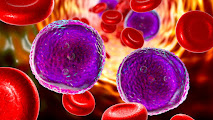
Leukemia in blood 
                              
What is leukemia?

Leukemia is a term for malignant growths of the platelets. Leukemia begins in blood-shaping tissues like the bone marrow. Your bone marrow makes the cells which will form into white platelets, red platelets, and platelets. Each kind of cell has an alternate work:

  • White platelets help your body battle disease
  • Red platelets convey oxygen from your lungs to your tissues and organs
  • Platelets assist with shaping clusters to quit dying

At the point when you have leukemia, your bone marrow makes huge quantities of strange cells. This issue frequently occurs with white platelets. These strange cells develop in your bone marrow and blood. They swarm out the solid platelets and make it hard for your cells and blood to take care of their responsibilities, Therefore many pharma consulting companies advised to transplant bone marrow.


What are the category of leukemia?

There are various sorts of leukemia. Which kind of leukemia you have relies upon the sort of platelet that becomes malignant growth and regardless of whether it develops rapidly or gradually.

The kind of platelet could be:

  • Lymphocytes, a kind of white platelet
  • Myeloid cells, juvenile cells that become white platelets, red platelets, or platelets

The various kinds can develop rapidly or gradually:

  • Intense leukemia is quickly developing. It ordinarily deteriorates rapidly on the off chance that it's not treated.
  • Persistent leukemia is slow developing. It ordinarily deteriorates throughout a more drawn out timeframe.

The principle category of leukemia are:

  • Intense lymphocytic leukemia (ALL), which is the most widely recognized sort of disease in kids. It can likewise influence grown-ups.
  • Intense myeloid leukemia (AML), which is more normal in more established grown-ups however can likewise influence kids
  • Persistent lymphocytic leukemia (CLL), which is quite possibly the most well-known kinds of leukemia in adult. It frequently happens during or later middle age.
  • Ongoing myeloid leukemia (CML), which for the most part happens in grown-ups during or later middle age

What causes leukemia?

Leukemia happens when there are changes in the hereditary material (DNA) in bone marrow cells. The reason for these hereditary changes is obscure.


Who is in danger for leukemia?

For the particular kinds, there are various variables which can raise your danger of getting that sort. In general, your danger of leukemia goes up as you age. It is generally normal over age 60, Early access program designed by the government of India and many countries worldwide for patient who  have exhausted the treatment options available. 


What are the indications of leukemia?

A portion of the indications of leukemia might include:

  • Feeling tired
  • Fever or night sweats
  • Simple swelling or dying
  • Weight reduction or loss of hunger
  • Petechiae, which are minuscule red spots under the skin. They are brought about by dying.

Other leukemia side effects can be not the same as type to type. Chromic leukemia may not cause indications from the get go.


How is leukemia analyzed?

Your medical services supplier might utilize many apparatuses to analyze leukemia:

  • An actual test
  • A clinical history
  • Blood tests, for example, a total blood count (CBC)
  • Bone marrow tests. There are two fundamental sorts - bone marrow yearning and bone marrow biopsy. The two tests include eliminating an example of bone marrow and bone. The examples are shipped off a lab for testing.

  • Hereditary tests to search for quality and chromosome changes

When the supplier makes a finding, there might be extra tests to see whether the disease has spread. These incorporate imaging tests and a lumbar cut, which is a system to gather and test cerebrospinal liquid (CSF).


What are the medicines for leukemia?

The medicines for leukemia rely upon which type you have, how extreme the leukemia is, your age, your general wellbeing, and different elements. Expanded access program provides imported medicines to help patients, Some potential medicines may include: 

  • Chemotherapy
  • Radiation treatment
  • Chemotherapy with undifferentiated organism relocate
  • Designated treatment, which uses drugs or different substances that assault explicit disease cells with less mischief to typical cells

Monday, December 20, 2021

How are hereditary conditions treated?


imported medicines in india for genetic disorder

Genetic disorder 

Numerous hereditary issues result from quality changes that are available in basically every cell in the body. Therefore, these issues regularly influence many body frameworks, and most can't be restored. Be that as it may, approaches might be accessible to treat or deal with a portion of the related signs and indications.


For a gathering of hereditary conditions called innate blunders of digestion, which
result from hereditary changes that upset the development of explicit proteins, medicines now and again incorporate dietary changes or substitution of the specific compound that is absent. Restricting specific substances in the eating regimen can assist with forestalling the development of possibly harmful substances that are typically separated by the catalyst. Now and again, compound substitution treatment can assist make with increasing for the catalyst lack. These medicines are utilized to oversee existing signs and side effects and may assist with forestalling future confusions. An illustration of a characteristic blunder of digestion is phenylketonuria (PKU), under named patient program we provides medicines to patients who exhausted all alternative treatment option. 


For other hereditary conditions, treatment and the board methodologies are intended to work on specific signs and indications related with the issue. These methodologies change by jumble and are explicit to a singular's wellbeing needs. For instance, a hereditary issue related with a heart deformity may be treated with a medical procedure to fix the imperfection or with a heart relocate. Conditions that are described by flawed platelet development, like sickle cell infection, can some of the time be treated with a bone marrow relocate. Bone marrow transplantation can permit the arrangement of typical platelets and, whenever done right off the bat throughout everyday life, may assist with forestalling episodes of torment and other future inconveniences.


Some hereditary changes are related with an expanded danger of future medical issues, like specific types of malignant growth. One notable model is familial breast cancer  identified with changes in the BRCA1 and BRCA2 qualities. The board might incorporate more incessant disease screening or preventive (prophylactic) medical procedure to eliminate the tissues at most noteworthy danger of becoming malignant.


Hereditary issues might cause such serious medical conditions that they are incongruent with life. In the most serious cases, these conditions might cause an unnatural birth cycle of an impacted undeveloped organism or hatchling. In different cases, impacted newborn children might be stillborn or kick the bucket soon after birth.  Hardly any imported medicines in india  are accessible for these serious hereditary conditions, wellbeing experts can regularly give strong consideration, like help with discomfort or mechanical breathing help, to the impacted person.


Most treatment procedures for hereditary issues don't change the basic hereditary transformation; be that as it may, a couple of issues have been treated with quality treatment. This exploratory strategy includes changing an individual's qualities to forestall or treat a sickness. Quality treatment, alongside numerous other treatment and the board approaches for hereditary conditions, are under study in clinical preliminaries.

Sunday, December 19, 2021

How virus infect our body ? | Imported Medicines In India


Pharma consulting companies
Viral Human Body 

To see how an infection functions, it is important to think for tiny scopes. At a so limited scale that the natural eye would never see the developments of an infection. Truth be told, infections are minuscule microorganisms in the world, yet they can make an individual wiped out and even kill.


Then, at that point, the inquiries are: How can something so little make an individual so wiped out? How does an infection repeat inside the body until it taints someone else? Would we be able to try not to become ill within the sight of an infection?


They are more normal than you might suspect


The main thing you should know about infections is that they are little bits of RNA (ribonucleic corrosive) or DNA (deoxyribonucleic corrosive), enveloped with a layer of proteins, which secure their hereditary material. This implies that they can't reproduce all alone, so they need a host cell to have the option to live.


They come in totally different shapes: as poles, adjusts, with crowns or round and hollow tails. In any case, it is preposterous to expect to see this with a basic magnifying lens. To see an infection, it is important to utilize an examining electron magnifying lens, which utilizes electrons rather than light to deliver a picture. Pharma consulting companies provides you that magnifying lens. 


Another significant reality is that there are many kinds of infections. Some can worthy motivation a typical influenza, while others can be more unsafe like HIV, Ebola or Coronavirus. Also, there are infections that enter the human body, however the resistant framework figures out how to battle them, so the individual doesn't become ill.


To put it plainly, infections can recreate and make other infections. This is conceivable as they can adjust effectively to any climate and any host. They are made to endure truly challenging conditions.


How would they enter the body?


Normally these microorganisms enter the body through the mouth, eyes, nose, private parts or through injuries, chomps or any painful injuries. Besides, they are sent through various courses.


A few illnesses are spread by direct contact with contaminated skin, mucous layers or body liquids. There is likewise the chance of aberrant contact, when an individual contacts an item (entryway, handle, table), which has the infection on it, when a tainted individual wheezes, hacks or talks or when the mucous layer comes into contact with someone else.


In some different cases, the infection is communicated through normal vehicle like polluted food, water or blood. At long last, there are vectors: rodents, snakes, mosquitoes and so forth, which communicate the infection to people.


The infection inside the human body


These life forms enter the body and hold fast to the cell surface. Contingent upon the sort of infection, it looks for cells in various pieces of the body: liver, respiratory framework or blood. Whenever it has connected itself to the sound cell, it enters it.


At the point when the infection is inside the cell, it will open up with the goal that its DNA and RNA will come out and go directly to the core. They will enter an atom, which resembles a processing plant, and make duplicates of the infection. These duplicates will emerge from the core to be collected and get protein, which ensures their DNA and RNA.


These new duplicates of the infection (a large number of duplicates) will pass on the generally tainted cell to contaminate other solid cells, where they will increase once more. Tainted cells can be harmed or kick the bucket while facilitating an infection.


It is critical to explain that when an infection contaminates a human, it doesn't generally wind up in an illness. The disease happens when the infection starts to increase. Furthermore, the sickness happens when many body cells are harmed by the contamination, which is likewise when the indications and disease show up.


Basically, assuming the resistant framework figures out how to fend off the infection that entered the phones and duplicated, the individual won't become ill. By the by, the body will react in various ways to battle these unfamiliar bodies.


At the point when the invulnerable framework neglects to control the infection, a cycle called pathogenesis starts. The infection crosses hindrances, for example, distance, the safe framework or mucous layers to arrive at various organs.


When it starts to reproduce, the individual will become ill and his/her organs will be tainted. Contingent upon how serious the indications are, the individual should rest or look for clinical assistance.


How to battle the infection?


The insusceptible framework is the body's first line of protection. Assuming it can't battle the infection since it has effectively contaminated a few organs, a treatment can be utilized to calm the manifestations (irritation of the organs that produces hack, cerebral pain, and so forth), until the safe framework can guard the body. Named patient program provides imported medicines to battle these infections.   


In like manner, drugs, like antivirals, might be utilized as they get inside the cells and are incorporated into the genomes of the infection to prevent it from imitating. This implies that antivirals harm the infection DNA ties to keep them from working. Accordingly,  imported medicines in india these medications are utilized to battle infections like herpes  or hepatitis C.


Then again, infections can be forestalled with immunizations. These days, this is the most proficient methodology utilized. The immunization creates a particular resistance against an illness since it trains antibodies and cells to perceive the irresistible specialist.


Taking everything into account, infections are microorganisms that can possibly live assuming they track down a host When they track down it assuming they figure out how to defeat all regular and logical obstructions that the body produces, they can contaminate the individual. Additionally, assuming that they figure out how to beat the invulnerable framework, the individual will become ill.


Despite the fact that it is difficult to keep any infection from contaminating people, through the experience of ages and the assistance of science, the human body ought to have the option to guard itself from unfamiliar specialists.


Wednesday, December 15, 2021

What are Enasidenib warning

 Warnings

Differentiation syndrome

  • In the clinical trial, 14% of patients treated with enasidenib experienced symptoms of differentiation syndrome, which can be fatal if not treated
  • Symptoms may include fever, dyspnea, acute respiratory distress, pulmonary infiltrates, pleural or pericardial effusions, rapid weight gain or peripheral edema, lymphadenopathy, bone pain, and hepatic, renal, or multiorgan dysfunction
  • Differentiation syndrome has been observed with and without concomitant hyperleukocytosis, as early as 1 day and at up to 5 months after initiating enasidenib
  • If differentiation syndrome is suspected, initiate corticosteroid therapy and hemodynamic monitoring until symptom resolution
  • Taper corticosteroids only after resolution of symptoms; differentiation syndrome symptoms may recur with premature discontinuation of corticosteroids
  • If severe pulmonary symptoms requiring intubation or ventilator support and/or renal dysfunction persist for >48 hr after initiation of corticosteroids, interrupt enasidenib until signs and symptoms are no longer severe
  • Hospitalization for close observation and monitoring of patients with pulmonary and/or renal manifestation is recommended

Contraindications

None

Cautions

Differentiation syndrome reported, which can be fatal if not treated

Based on animal embryofetal toxicity studies, can cause embryofetal harm when administered to pregnant women. drugs available for pregnant women 

Drug interaction overview

  • OATP1B1, OATP1B3, and BCRP substrates

  1. Enasidenib is an OATP1B1, OATP1B3, and BCRP inhibitor
  2. Coadministration with OATP1B1, OATP1B3, and BCRP substrates will increase effects and toxicities of these substrates
  3. Decrease dose of OATP1B1, OATP1B3, and BCRP substrate(s) as recommended in respective prescribing information, and as clinically indicated

  • P-gp substrates

  1. Enasidenib is a P-gp inhibitor
  2. Coadministration with P-gp substrates will increase effects and toxicities of these substrates
  3. For a sensitive P-gp substrate may lead to serious adverse reactions, decrease dose or modify dosing frequency of such a P-gp substrate and monitor for adverse reactions as recommended in respective prescribing information
       
IDHIFA (ENASIDENIB)


DRUG INTERACTIONS IDHIFA

Effect Of IDHIFA On Other Drugs

OATP1B1, OATP1B3, And BCRP Substrates

IDHIFA is an OATP1B1, OATP1B3, and BCRP inhibitor. Coad ministration of IDHIFA increases the exposure of OATP1B1, OATP1B3, and BCRP substrates, which may increase the incidence and severity of adverse reactions of these substrates [see CLINICAL PHARMACOLOGY]. Decrease the dosage of OATP1B1, OATP1B3, and BCRP substrate(s) as recommended in the respective prescribing information, and as clinically indicated.

Certain P-glycoprotein (P-gp) Substrates

IDHIFA is a P-gp inhibitor. Coad ministration of IDHIFA increases the exposure of P-gp substrates, which may increase the incidence and severity of adverse reactions of these substrates [see CLINICAL PHARMACOLOGY]. For a P-gp substrate where small concentration changes may lead to serious adverse reactions, decrease the dose or modify the dosing frequency of such a P-gp substrate and monitor for adverse reactions as recommended in the respective prescribing information.


IDHIFA (ENASIDENIB)


Tuesday, December 14, 2021

How much take Idhifa Medicine dosage

The Idhifa dosage your doctor prescribes will depend on your condition and whether you have serious side effects from treatment.


Before and during Idhifa treatment, your doctor will test your blood cell counts and other lab values. Based on these results, your doctor will adjust your Idhifa dosage if needed.


The following information describes dosages that are commonly used or recommended. But be sure to take the dosage your doctor prescribes for you. Again, your doctor will determine the best dosage to fit your needs.

Idhifa Medicine


Drug forms and strengths

Idhifa comes as tablets that you’ll take by mouth. It’s available in two strengths:


  • 50 milligrams (mg)
  • 100 mg

Dosage for AML

The recommended dosage of Idhifa for treating a type of relapsed or refractory acute myeloid leukemia (AML)* is 100 mg once daily.


You’ll take this dosage for at least 6 months, unless:


  • your AML gets worse, or
  • you have unmanageable, serious side effects from Idhifa